
What to Expect at Your First Neuro Rehabilitation Sessions
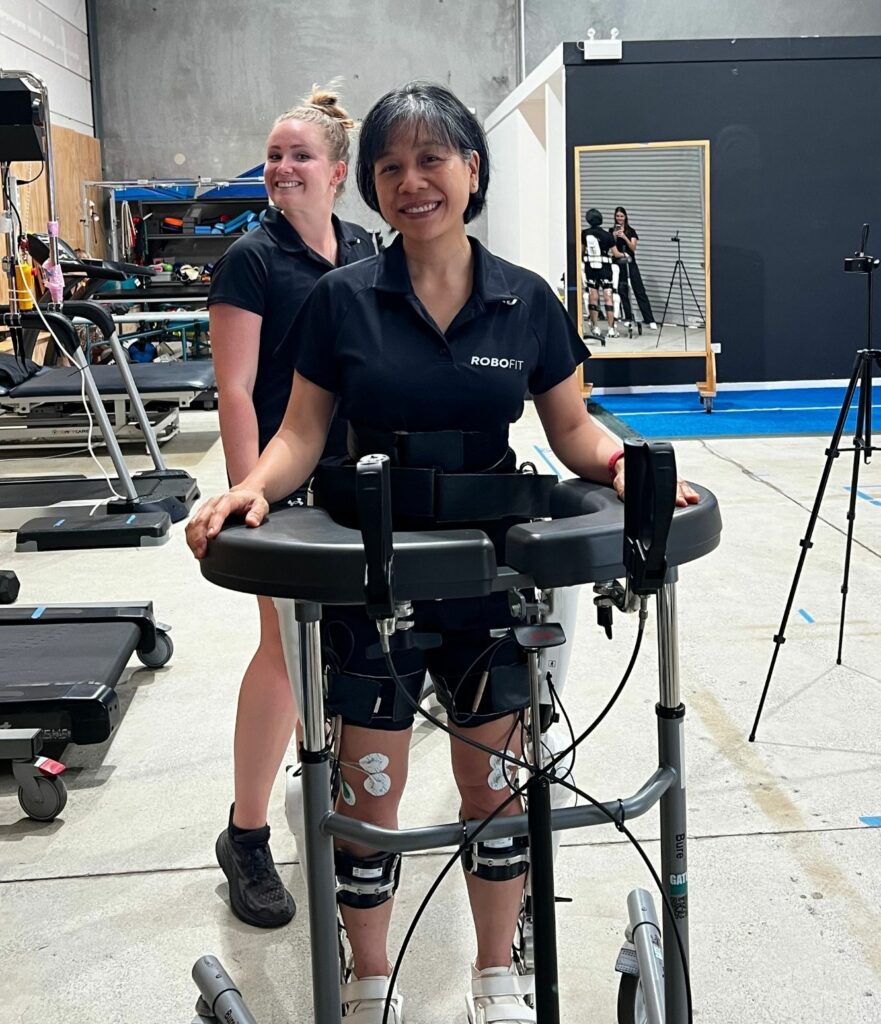
Your First Session: Assessment and Goal Setting
Your initial appointment is primarily about assessment and planning. Your clinician will discuss your medical history, current challenges, previous treatments and the activities that are most important to you. This might include your goals to walk independently, improve balance, reduce falls, return to work or participate in hobbies and community activities.
We will also assess areas such as:
- Walking and mobility
- Balance and coordination
- Strength and endurance
- Transfers and functional movement
This assessment helps us understand your starting point and identify the most effective strategies for you. Together, you and your clinician will discuss a plan of action, including type of session (goal-based, single joint exoskeleton or walking exoskeleton) frequency and duration.
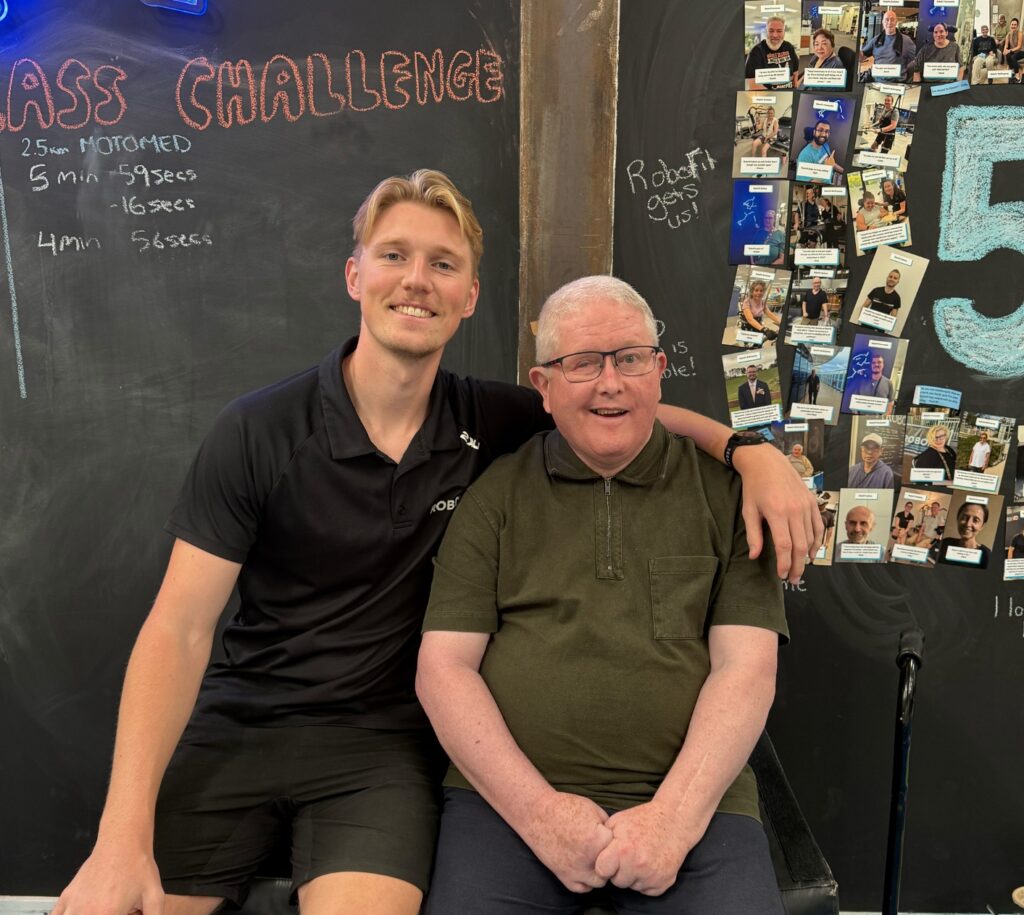
Your Second and Third Sessions
Once we have established your goals and baseline abilities, treatment becomes more active.
Depending on your needs, sessions may include:
- Walking and gait training
- Balance exercises
- Strength and conditioning
- Functional movement practice
- Cardiovascular training
- Technology-assisted rehabilitation
- Education and self-management strategies
The focus is always on practising meaningful activities that support your long-term goals.
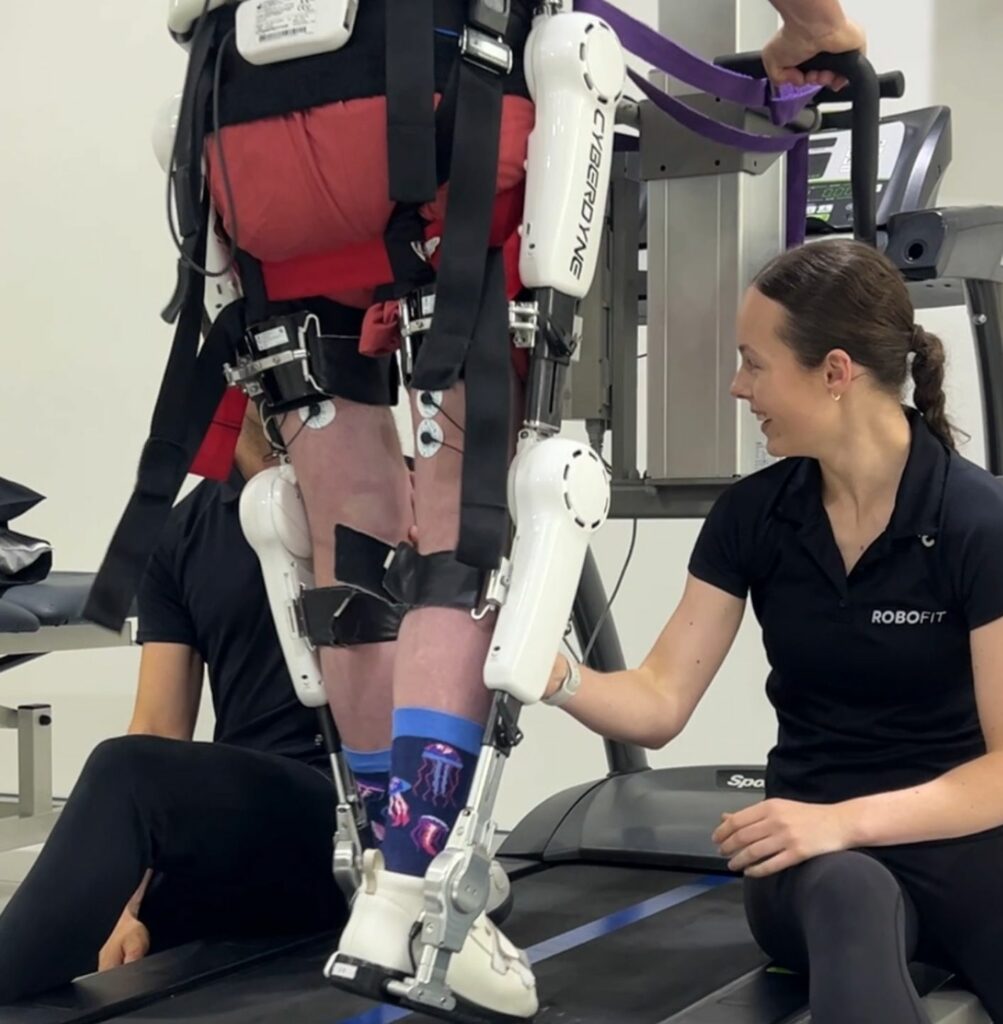
What to Expect During HAL Gait Training
HAL (Hybrid Assistive Limb) is a robotic exoskeleton that detects your movement intentions and assists you in practicing walking.
A typical session includes:
- Application of electrodes around the hip and knee muscles to detect movement signals.
- Fitting of a safety harness and attachment to the Body Weight Support System (BWSS).
- Attachment of the HAL device while seated or standing, depending on your abilities.
- Walking practice on a treadmill with the support of HAL and the BWSS.
- Multiple walking rounds throughout the session, aiming for as much quality practice as possible while managing fatigue.
- Ongoing education from your clinician about how HAL works and how it supports rehabilitation.
Sessions are designed to maximise the amount of active walking practice while maintaining safety and comfort.
To finish the session, you may practice walking overground without the device. This helps transfer the movement patterns practiced in HAL into real world walking and encourages carry over into everyday activities.
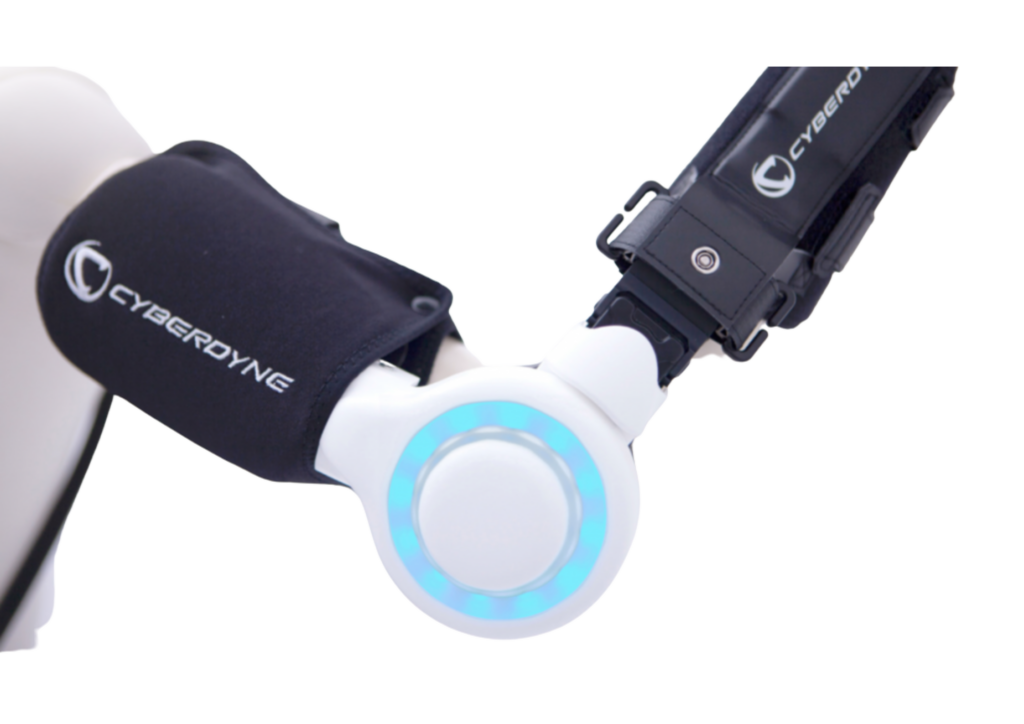
What to Expect During HAL Single Joint Training
Some people may benefit from training a specific joint movement before progressing to more complex tasks such as walking.
During a HAL Single Joint session:
Electrodes are attached to the muscles involved in the target movement.
The Single Joint HAL device is fitted while seated.
The device assists with a specific movement, such as knee flexion and extension, ankle movement as well as elbow flexion and extension.
Hundreds of repetitions may be performed throughout the session, depending on fatigue and tolerance.
The goal is often to achieve a range of motion or movement quality that may not be possible without the device.
This intensive repetition provides the nervous system with valuable movement practice and can help reinforce more normal movement patterns.
Following the robotic training, your clinician may complete “part practice” exercises where you attempt the same movement without the device. Depending on your goals and abilities, this may also progress into standing activities or walking practice to help transfer gains into functional movement.
Goal-Based Neuro Rehabilitation Sessions
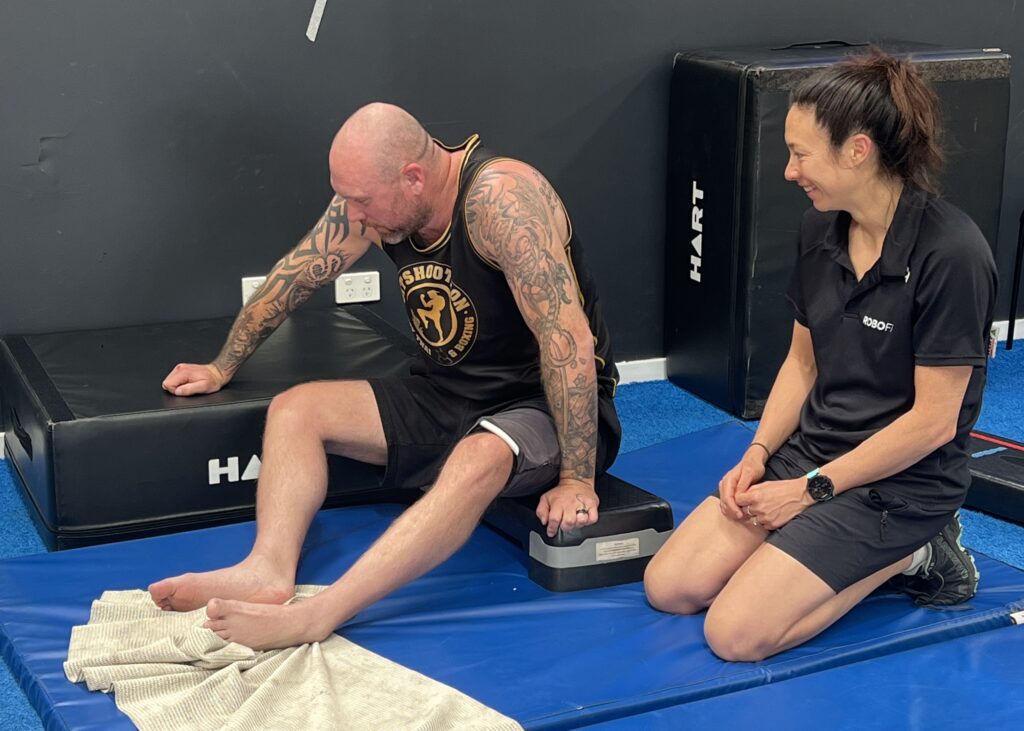
Not every session requires robotic devices. Standard goal-based neuro rehabilitation focuses on functional outcomes using traditional therapy techniques:
- Assessment of movement and function – walking, balance, transfers, arm function, and daily tasks.
- Task-specific practice – practising movements that matter most to your daily life, such as standing from a chair, reaching for objects, stairs, or walking short distances.
- Strength and conditioning exercises – tailored to improve endurance, stability, and control.
- Balance and coordination exercises – including dynamic weight shifts, step practice, or obstacle negotiation.
- Education and strategies – teaching techniques to improve movement safety and independence at home.
- Goal setting – sessions are structured around what matters most to you, ensuring every activity works towards meaningful improvements.
These sessions are highly individualised and can complement or serve as a foundation for robotic-assisted therapy.
Common Questions About Your First RoboFit sessions
Will I see results immediately?
What should I wear?
Will therapy be challenging?
Can family members attend?
Newsletter signup
Join our exciting journey in discovering the future of therapy by subscribing below.